Wednesday, 2 December 2015

Passe Compose (French)


Passe Compose 

Passe Compose is used to describe an action that has just happened, which is completed already. In order to construct Passe Compose one must decide auxillary verb fits the situation. There are two main auxillary verbs in French, Etre and Avoir. After deciding which verb is correct look at the formula of construction-
La Formule est: Subject + Conjugation of Auxillary verb + Past Participle of verb.
Here is the conjugation of Etre:                                     Here is the conjugation of Avoir
Je suis                                                                          J'ai
Tu es                                                                            Tu as  
Il/Elle/On est                                                                Il/Elle/On a
Nous sommes                                                                 Nous avons
Vous etes                                                                      Vous avez
Ils/Elles sont                                                                  Ils/Elles ont

In order to form the past participle the verb has to remove it's ending of 'er ir re' and replace them with new endings as followed. There are exceptions as this is for regular verbs.
er___é

ir____i

re___u
When verbs take up Etre the past participle changes depending upon Number Gender and Subject. For the feminine form the participle gains an 'e', for the plural form it gains an 's' and for the feminine plural form it gains an 'es'.
The irregular 'Etre' verbs can be remembered in the following ways described on the left hand side.


If an individual has a really good visual memory this picture will help out below.. Also there is of course the ' Le cercle de la vie' on the left hand side'. There are many verbs which go to avoir that are irregular so practice is required everyday in order to perfect Passe Compose.

Sunday, 29 November 2015

The Xi Jiang River


The Xi Jiang River


The Xi-Jiang river, also known as the Pearl river, crosses from the Plateau of Tibet to it's mouth near the South China Sea. It has three main tributaries: Xi Jiang; Beijiang; Dongjiang. 
The landscape has many distinctive features an individual will never forget. The caverns and the nature calved lime stones aswell as the wide range of variety makes this a place beyond your dreams. 
It is the second largest river system in China after the Yangtze. Some of Xi Jiang's fishes include the protected Chinese Sturgeon which swims in the depths of the Pearl river. 
There is also an ink stone island in between aswell often known as the Yanzhou.
It has a wide range of fishes, as mentioned before, like the Sanli fish which are found in spring.

Thursday, 26 November 2015

LDPR- Four factors affecting climate

LDPR- Four factors affecting climate

Latitude

The equator and the regions near it receive vertical rays from the sun. The sun's rays become more slanted towards the poles. The vertical rays lose heat however near the poles as the rays become more slanted. The areas which are near the equator receive a concentrated amount of sunlight therefor places near to the equator are warmer than places near the poles.

Distance from the sea

The and get's heated up and cools down faster near places on the coast of the sea. Whereas the sea which is heated in the summer remains warm in winter. In summer places near the coast is warmer due to the cooling effect of the sea. In places near the inland summers are hot and dry while winters are cool and wet.

Prevailing Winds

The direction from where the wind picking is moisture also affects the temperature of a place. For example in Britain the P.W bow from the South-west. They bring cool weather if they blow over cool surfaces; warm weather if blown over warm surfaces; dry weather it blown over the land and wet weather if blown across wet surfaces.

Relief

The atmosphere is absorbed by the heat of the Earth. Approximately the temperature drops one degree Celsius for every hundred meters in height. As we go up the layers the clouds are thinner and less heat is absorbed. As Air moves upwards it cools to condense in to water vapor and rainfall occurs on the higher heights.

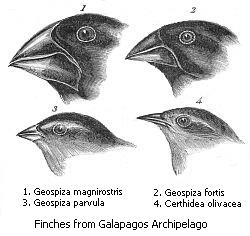
The Theory of evolution by natural selection

The Theory of evolution by natural selection

  • Individuals within a species are different from each other. These are commonly known as variations.
  • If the climate or food changes some animals or plant are relatively better the other individuals in the same environment.
  • If one variety lives longer it has the ability to produce more offspring than one with a shorter life span. 
  • If some offspring inherit alleles responsible for variation they are likely to live longer and leave behind more offspring. 
  • In due course it will replace the original variety.
  • Some birds are adapted to fit into the surroundings.
  •                              

Wednesday, 25 November 2015

Bluetooth

Bluetooth

Bluetooth architecture

Bluetooth architecture mainly defines two types of networks: Piconet and Scatternets.
Piconet is a Bluetooth network that consists of one primary node and seven secondary nodes. So it can have up to 8 nodes, however it can consist of 255 parked nodes which need to be activated to be into an active state. The main distance range of a piconet can go to about 10 meters. There can only be one primary master in each piconet. The connections between transfer of data from primary to slave can be one-one or one-many. Slave to Slave communications are not possible. 

Scatternets are formed by combining various piconets. A slave in one piconet can act as a master in another piconet. It can receive messages from the first piconet is the master. Such nodes are called as bridge slaves. So a node can be a member in two piconets but not a master in both.

The Radio layer in the protocol stack

The Bluetooth radio layer corresponds to the physical layer of OSI Models. It functions with radio transmissions and modulation. For modulation it uses GFSK, an FSK with a Gaussian bandwidth layering. Bluetooth uses Frequency hopping spread spectrum to avoid interference with other networks and devices. It is also divided into 79 channels with MHz each. It uses a GHz ISM band in a range of 10 meters.

Baseband layer

It uses a form of TDMA called TDD-TDMA ( a half duplex system which the receiver can send and receive data but not in  the time. They communicate together in time slots. It communicates at time slot of 625 mono-seconds. If the Primary has no slaves then it communicates at an even numbered slot and vice-versa. Multiplexing happens at the sender side and de-multiplexing at the receivers side. 

Monday, 23 November 2015

Adaptive Features

Adaptive features

The Camel

A Camel's feet reduce the tendency to sink in sand. They have large eyelashes to keep out sand and also has a large water-storage capacity to store water. However it needs to take in more water to prevent it from evaporating.More water is conserved with the help of a thin line of Mucus around the Nasal passage. This helps the Camel to survive in the extreme heat of it's habitat- the desert.
The Camel


The Polar bear

To survive the extreme cold they have a thick coat with insulated hairs which are water-repellent. They also have a heat exchange mechanism which allows more heat to be trapped in the polar bear's body. Their layers of blubber allows a limited amount of blood supply to the polar bear. Their hairs on the inside are a perfect insulation to absorb more heat while the outside coated white fur allows it to attack and camouflage. These features help it survive in the cold conditions of the Arctic.
The Polar Bear


The Long Eared Bat

They give out high pitched sounds which reflect back to it's ears. With this they can judge distances and efficiently hunt at night. It's body is insulated with fur and it's forearms has a membrane of skin to aid in their ease of flight. It also has a large surface area on it's wing. The long eared bat is one of the most efficient hunters at night (nocturnal) due to it's keen hearing skills. Making this animal one to watch. 
The Long Eared Bat


The Periodic Table

The Periodic Table

Mendeleev's Periodic Table inspired scientists to discover new elements to the periodic table. Although precursors exist, he is generally credited with the publication. He developed his table to illustrate periodic trends in the properties of the then-known elements. Mendeleev was therefor not one of the first authors of the periodic table but is generally classified as the publisher. He also thought of ways to implement different periodic trends to reach out his point of the elements. Without further ado, here is the periodic table.
The Periodic Table

Ionic and Covalent bonding

Ionic and Covalent bonding

Hydro-Chloric Acid
Ionic and Covalent bonding show the different bonds an atom makes in order to gain stability. Ionic bonding is the transfer of electrons from one atom to the the other so both the atoms achieve what is required. Whereas Covalent bonding is the sharing of electrons so both sides get each other's electrons. Ionic bonds are mainly solids at room temperature and the strength of their bonds are very high. Comparatively Covalent bonds are gaseous at room temperature and have a relatively low strength of bond. Molecules of Ionic bonds include common salt where ions are formed in a lattice formation and react to make Sodium Chloride. Molecules of Covalent bonds include Hydro-Chloric acid where no ions are formed but are packed enough to form enough the molecule.

These ball and stick models will help me further explain this topic on Covalent bonds.
Ammonia

Nitrogen
Oxygen

Water


Methane

Carbon Dioxide

Ethanol